Best Home EV Chargers in 2026: Top 5 Picks and Complete Buying Guide
If you have recently purchased an electric vehicle or are planning to buy one, a Level 2 home charger is one of the smartest investments you can make. Charging overnight at home is cheaper, more convenient, and more reliable than depending on public charging networks. This comprehensive guide reviews the top-rated EV chargers for 2026 and explains everything you need to know to choose the right one for your needs.
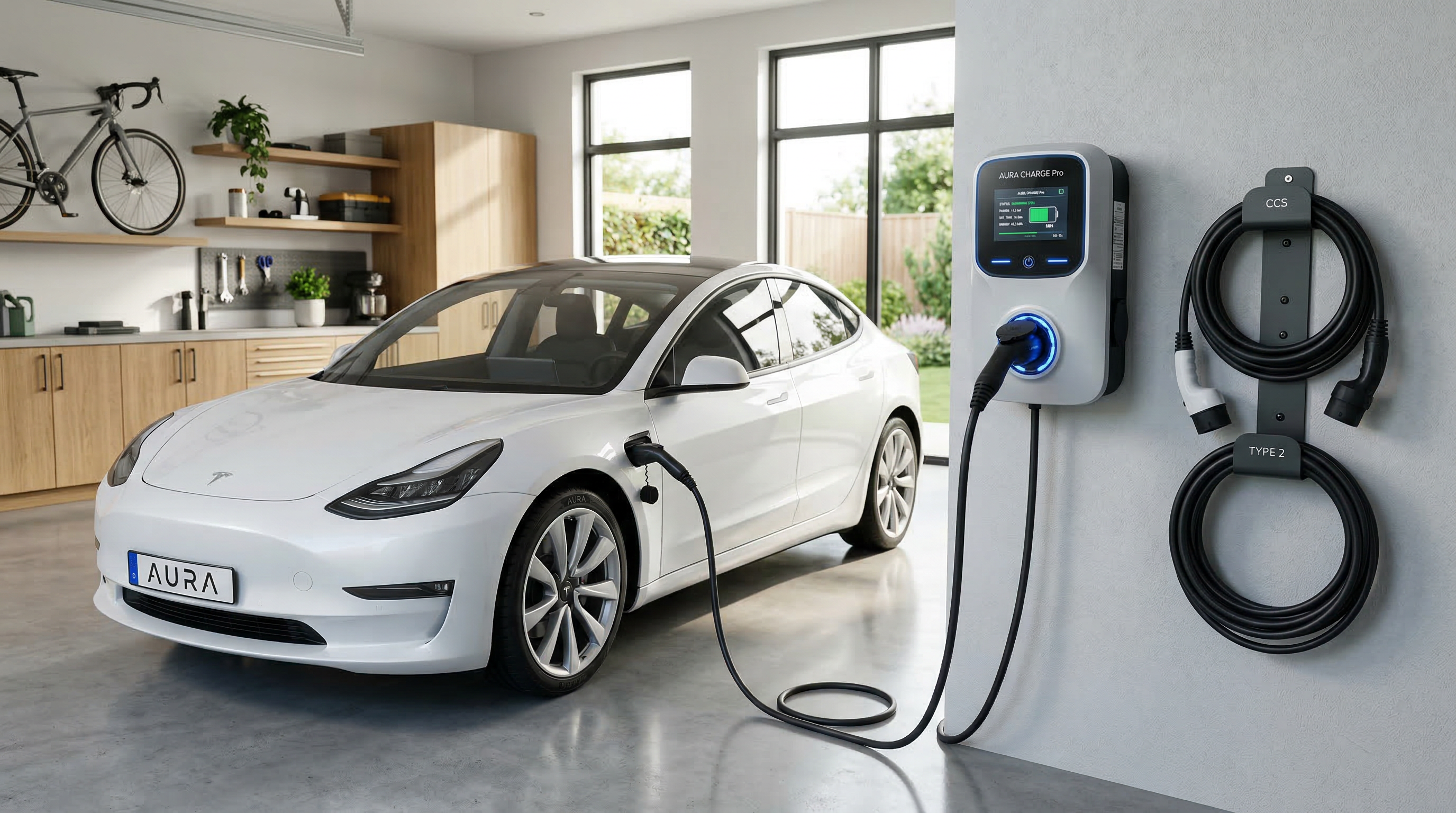
Why Home Charging Matters in 2026
As electric vehicle adoption accelerates in 2026, home charging has become the backbone of EV ownership for most drivers. Industry data suggests that approximately 80 percent of EV charging happens at home, making a reliable home charging setup essential for a positive EV ownership experience.
The benefits of home charging are substantial and multifaceted. Charging at home overnight typically costs 50 to 70 percent less than using public fast charging stations. You wake up every morning with a fully charged vehicle, eliminating range anxiety and the need to plan your day around charging stops. Your car charges while you sleep, making the most of off-peak electricity rates and minimizing inconvenience.
Level 2 home chargers operate at 240 volts, the same voltage used by large appliances like electric dryers and ranges. These chargers can deliver 20 to 80 miles of range per hour of charging, depending on the charger's power output and your vehicle's charging capacity. This means most EVs can fully charge overnight, even starting from a very low battery level.
Understanding EV Charging Basics
Before diving into specific product recommendations, it is important to understand the different types of EV charging and what factors affect charging speed.
Level 1 vs Level 2 Charging
Level 1 charging uses a standard 120-volt household outlet. While it requires no special installation, it is painfully slow, delivering only 3 to 5 miles of range per hour. For most EV owners, Level 1 charging is inadequate as a primary charging solution, though it can work as a backup or for plug-in hybrids with small batteries.
Level 2 charging operates at 240 volts and requires a dedicated circuit and installation by a licensed electrician. This is the sweet spot for home charging, offering a practical balance of charging speed, cost, and convenience. Level 2 chargers can be hardwired into your electrical panel or plugged into a 240-volt outlet similar to those used for electric dryers.
Amperage and Charging Speed
Level 2 chargers are available in different amperage ratings, typically ranging from 16 amps to 50 amps. Higher amperage means faster charging, but your charging speed is limited by three factors: the charger's maximum output, your vehicle's maximum charging rate, and your electrical panel's capacity.
Most modern EVs can accept at least 32 amps, and many newer models can handle 48 amps or more. However, if your electrical panel is already near capacity, you may need to upgrade it or choose a lower-amperage charger. Many smart chargers offer adjustable amperage settings, allowing you to dial down the power draw if needed.
The NACS Standard Revolution
In 2026, the North American Charging Standard (NACS), originally developed by Tesla, has become the de facto standard for new EVs in North America. Major automakers including Ford, GM, Rivian, Mercedes, BMW, and others have committed to adopting NACS for their vehicles.
For charger buyers, this standardization simplifies the decision process. Most new home chargers ship with NACS connectors or offer easily swappable connector cables. If you have an older EV with a J1772 connector, adapters are widely available and inexpensive.
Related Reading: The shift to NACS is part of the broader EV infrastructure revolution. Learn more in our comprehensive guide: The Future of Green Technology in 2026.
Our Top 5 EV Chargers for 2026
After researching the market and considering factors including charging speed, smart features, build quality, price, and user reviews, we have selected five outstanding home EV chargers that represent the best options for different needs and budgets.
1. ChargePoint Home Flex: Best Overall Versatility
The ChargePoint Home Flex continues to be one of the most popular and well-regarded home EV chargers, and for good reason. Its key strength is flexibility: adjustable amperage from 16 to 50 amps, both plug-in and hardwired installation options, and compatibility with all EVs through its NACS and J1772 connection options.
The ChargePoint mobile app provides excellent monitoring and scheduling features. You can track your charging sessions, monitor energy consumption, schedule charging to take advantage of off-peak electricity rates, and receive notifications when charging starts and completes. The app integrates with ChargePoint's broader public charging network, making it easy to find and pay for public charging when needed.
Build quality is excellent, with a weather-resistant enclosure rated for outdoor installation and a 23-foot cable that provides good reach for most garage and driveway configurations. The unit's amperage can be adjusted via the app, which is useful if you move or upgrade your electrical service.
Best for: Most EV owners seeking a reliable, feature-rich charger from an established brand with good customer support.
Key Specs: 16-50 amps adjustable, 240V, 23-foot cable, NACS and J1772 compatible, Wi-Fi enabled, indoor/outdoor rated.
2. Tesla Wall Connector: Best for Tesla Owners
If you own a Tesla, the Tesla Wall Connector offers the most seamless and integrated charging experience. It delivers up to 48 amps of power, supports Wi-Fi connectivity for over-the-air updates and monitoring through the Tesla app, and features the minimalist design aesthetic Tesla is known for.
The Wall Connector can charge two Tesla vehicles simultaneously if you install two units on the same circuit, with automatic power sharing to optimize charging speed. While designed primarily for Teslas, the Wall Connector supports the NACS standard and can charge other EVs with the appropriate connector.
Installation is straightforward for qualified electricians, and the unit's slim profile looks clean mounted on a garage wall. Tesla's customer support and warranty service are generally well-regarded, and the Wall Connector integrates perfectly with Tesla's vehicle monitoring systems.
Best for: Tesla owners who want the simplest, most integrated charging experience with their vehicle ecosystem.
Key Specs: Up to 48 amps, 240V, 24-foot cable, NACS native with adapter support, Wi-Fi enabled, indoor/outdoor rated.
3. Emporia Smart EV Charger: Best Value and Energy Monitoring
The Emporia Smart EV Charger delivers impressive features at a more accessible price point than many competitors. It offers adjustable power delivery up to 48 amps, both plug-in and hardwired options, and an excellent smartphone app for scheduling and monitoring.
What sets the Emporia apart is its energy monitoring capabilities. The app provides detailed insights into your charging costs, energy consumption patterns, and even allows you to set a charging budget. You can schedule charging to align with the lowest electricity rates or the highest solar production if you have home solar panels.
Build quality is solid, with a weatherproof enclosure suitable for outdoor installation and a 25-foot cable for good reach. The unit supports both NACS and J1772 connections and integrates with popular smart home platforms including Alexa and Google Assistant.
Best for: Budget-conscious buyers who want smart features and excellent energy monitoring without premium pricing.
Key Specs: Up to 48 amps, 240V, 25-foot cable, NACS and J1772 compatible, Wi-Fi and smart home integration, detailed energy monitoring.
4. Wallbox Pulsar Plus: Best Smart Home Integration
The Wallbox Pulsar Plus excels in smart home integration and remote management capabilities. Its app offers sophisticated scheduling options, energy management features, and compatibility with home energy management systems. The Pulsar Plus can integrate with solar installations to preferentially charge using excess solar production.
The compact design is among the smallest in the category, making it a good choice for tight installation spaces. Despite its small size, the Pulsar Plus delivers up to 48 amps and includes a generous 24-foot cable. The unit supports both Wi-Fi and Bluetooth connectivity and can be controlled via voice commands through Alexa or Google Assistant.
Advanced features include power boost technology that can dynamically adjust charging power based on household energy consumption, preventing circuit overloads while maximizing charging speed. The Pulsar Plus also supports load balancing between multiple chargers if you have more than one EV.
Best for: Tech-savvy users who want maximum smart home integration and advanced energy management features.
Key Specs: Up to 48 amps, 240V, 24-foot cable, NACS and J1772 compatible, Wi-Fi and Bluetooth, power boost and load balancing, solar integration ready.
5. Grizzl-E Classic: Best Durability and Weather Resistance
The Grizzl-E Classic takes a different approach, prioritizing rugged construction and reliability over smart features. Built in Canada and designed for extreme weather conditions, the Grizzl-E can operate in temperatures from negative 40 to 122 degrees Fahrenheit. Its aluminum enclosure and industrial-grade components make it one of the most durable chargers available.
The Grizzl-E delivers up to 40 amps of power and features a 24-foot cable. While it lacks Wi-Fi connectivity and app-based controls, this simplicity means fewer potential points of failure. A basic LED indicator shows charging status, and the unit includes built-in overcurrent protection and ground fault detection.
For buyers in harsh climates or those who simply want a no-nonsense, bulletproof charger, the Grizzl-E offers excellent value. Its price is typically lower than comparable smart chargers, and its robust construction suggests it will outlast many competitors.
Best for: Users in extreme climates or those who prefer simple, ultra-reliable equipment without smart features.
Key Specs: 40 amps, 240V, 24-foot cable, NACS and J1772 compatible, operates negative 40 to 122 degrees F, no Wi-Fi, extremely durable construction.
Charging Speed Comparison
Miles of range added per hour of charging at maximum amperage
Key Features to Consider
Beyond the specific product recommendations, understanding what features matter for your situation will help you make an informed decision.
Smart Features and Connectivity
Wi-Fi-enabled chargers offer remote monitoring, charging scheduling, and energy tracking through smartphone apps. These features provide convenience and can help reduce electricity costs by scheduling charging during off-peak hours when rates are lower. However, they also represent potential points of failure and add complexity.
Consider whether you will actually use smart features. If you primarily charge overnight and do not need detailed monitoring or scheduling, a simpler charger may be more reliable and cost-effective. On the other hand, if you have time-of-use electricity rates or want to integrate charging with home solar production, smart features become much more valuable.
Cable Length
EV chargers typically come with cables ranging from 18 to 25 feet. Longer cables provide more flexibility in where you can park relative to the charger location but are heavier and more cumbersome to manage. Consider your garage or parking area layout and measure the distance from your planned charger location to your vehicle's charging port.
Remember that the charging port location varies by vehicle: rear passenger side, front driver side, front center, and other positions are all common. If you plan to charge multiple vehicles or may purchase a different EV in the future, a longer cable provides more flexibility.
Plug-In vs Hardwired
Plug-in chargers connect to a 240-volt outlet similar to those used for electric dryers. They are easier to install if an appropriate outlet already exists, and they can be unplugged and moved if you relocate. However, plug-in chargers are typically limited to 40 amps due to outlet ratings.
Hardwired chargers connect directly to your electrical panel and can support higher amperages up to 50 amps or more. They are more permanent installations but can deliver maximum charging speed if your vehicle and electrical service support higher power levels. Many chargers offer both plug-in and hardwired options.
Indoor vs Outdoor Installation
Most modern EV chargers are rated for outdoor installation with weatherproof enclosures. However, installation inside a garage provides additional protection from the elements and vandalism. If you must install outdoors, ensure the charger has appropriate weather ratings and consider adding a protective cover or enclosure for added durability.
Solar Integration: Pairing your EV charger with home solar panels can significantly reduce charging costs. Learn more about solar technology advances in our article on next-generation perovskite solar cells.
Installation Considerations
Proper installation is critical for safe and efficient EV charging. Here is what you need to know about the installation process.
Electrical Panel Assessment
Before purchasing a charger, have a licensed electrician assess your electrical panel. Your panel must have sufficient capacity to support the charger's power draw in addition to your home's existing electrical loads. Most homes have 100, 150, or 200-amp electrical service.
A 40-amp charger will draw 50 amps at the panel due to the 80 percent continuous load rule in electrical code. If your panel is already near capacity, you may need to upgrade your service or choose a lower-powered charger. Panel upgrades can cost several thousand dollars but may be necessary for optimal charging performance.
Circuit and Wiring Requirements
Level 2 chargers require a dedicated 240-volt circuit. The circuit breaker size depends on the charger's amperage rating: a 40-amp charger needs a 50-amp breaker, a 48-amp charger needs a 60-amp breaker. The electrical code requires the circuit to be sized for 125 percent of the charger's continuous load.
Wire gauge also matters. Larger wires can safely carry more current, and longer wire runs require larger gauges to minimize voltage drop. Your electrician will calculate the appropriate wire size based on the charger amperage and the distance from the panel to the charger location.
Permits and Inspections
Most jurisdictions require electrical permits for Level 2 charger installations. While this adds some time and cost to the process, permits ensure the work is done to code and inspected for safety. Work with a licensed electrician who will handle permit applications and schedule required inspections.
Installation Costs
Professional installation typically costs between 500 and 2000 dollars, depending on the complexity of the job. Factors affecting cost include distance from the electrical panel to the charger location, whether the panel has available capacity or needs upgrades, the need to run conduit or bury cables, and local labor rates.
While this is a significant expense, proper installation is not optional. DIY installation of 240-volt equipment is dangerous and likely violates electrical code. The investment in professional installation ensures safety and reliability.
Installation Cost Breakdown
Cost of Ownership and Incentives
When evaluating the cost of a home EV charger, consider both the upfront expense and ongoing operating costs, as well as available incentives that can reduce your net cost.
Electricity Costs
Home charging costs depend on your local electricity rates and how much you drive. At a national average of about 16 cents per kilowatt-hour, charging a typical EV with a 60 kWh battery from empty to full costs approximately 9 to 10 dollars. This delivers 200 to 300 miles of range depending on the vehicle, equivalent to 3 to 5 cents per mile.
For comparison, a gas vehicle getting 30 mpg with gas at 3 dollars per gallon costs 10 cents per mile, roughly three times more expensive. The savings add up quickly: driving 12,000 miles per year costs about 400 to 600 dollars for an EV versus 1,200 dollars for a comparable gas vehicle.
Time-of-Use Rates
Many utilities offer time-of-use electricity rates with lower prices during off-peak hours, typically overnight when most people charge their EVs. These rates can reduce charging costs by 30 to 50 percent compared to standard rates. Smart chargers make it easy to schedule charging during these low-rate periods automatically.
Federal and State Incentives
Various incentive programs can reduce the cost of purchasing and installing an EV charger. Federal tax credits of up to 30 percent of equipment and installation costs may be available under clean energy tax incentive programs. Many states and local utilities offer additional rebates or incentives specifically for EV charger installations.
Check the Database of State Incentives for Renewables and Efficiency (DSIRE) and contact your local utility to learn about programs in your area. These incentives can significantly reduce your net cost, sometimes covering 50 percent or more of the total expense.
Common Questions and Troubleshooting
Here are answers to frequently asked questions about home EV charging.
Can I Use a Portable Charger Instead?
Portable Level 2 chargers that plug into existing outlets can work for some users, but they have limitations. Most are limited to 32 amps or less, charge more slowly than permanent installations, and take up trunk space if you carry them around. For primary home use, a permanently installed charger is more convenient and reliable.
Do I Need a Smart Charger?
Smart features are helpful but not essential. If you have time-of-use electricity rates, want to track charging costs, or plan to integrate with home solar, smart features provide real value. If you simply want to plug in and charge overnight at a flat electricity rate, a basic charger works fine and costs less.
What If I Have Multiple EVs?
If you have two EVs, you have several options. You can install two separate chargers, though this requires sufficient electrical panel capacity. Some chargers support load balancing, allowing two units to share available power dynamically. Alternatively, you can install one charger and swap which vehicle charges each night, though this is less convenient.
Can I Take My Charger When I Move?
Plug-in chargers can be unplugged and moved to your new home. Hardwired chargers are more difficult to relocate, as they must be professionally removed and reinstalled. If you may move in the near future, a plug-in charger provides more flexibility.
Future-Proofing Your Installation
As EV technology continues to evolve, consider these factors to ensure your charging setup remains relevant.
Bidirectional Charging
Vehicle-to-grid (V2G) and vehicle-to-home (V2H) technologies allow EVs to discharge power back to the grid or home. While not yet common, these capabilities are being integrated into newer vehicles. If you plan to keep your charging setup for many years, look for chargers that support or can be upgraded for bidirectional charging.
Higher Power Standards
As battery technology improves, vehicles may support faster charging. Installing conduit and wiring sized for higher amperage than you currently need provides flexibility to upgrade your charger in the future without rewiring. Discuss this with your electrician during installation.
Solar Integration
If you are considering home solar panels now or in the future, choose a charger with solar integration features. These chargers can preferentially charge using excess solar production, maximizing your use of clean energy and reducing grid electricity consumption.
Battery Technology: The future of EV charging depends on battery advances. Read about the next generation of battery technology in our article: The Race to Build Commercial Solid-State Batteries.
Conclusion: Choose the Right Charger for Your Needs
Selecting a home EV charger requires balancing multiple factors including charging speed, smart features, budget, and installation requirements. The best charger for you depends on your specific situation: your vehicle's charging capabilities, your electrical panel capacity, whether you value smart features, and your budget.
For most users, the ChargePoint Home Flex offers the best combination of flexibility, features, and reliability. Tesla owners will appreciate the seamless integration of the Tesla Wall Connector. Budget-conscious buyers should consider the Emporia for excellent value with smart features. Tech enthusiasts will enjoy the Wallbox Pulsar Plus's advanced integration capabilities. And those in harsh climates or who prefer simplicity should look at the ultra-durable Grizzl-E Classic.
Regardless of which charger you choose, the investment in home charging infrastructure will pay dividends in convenience, cost savings, and peace of mind throughout your EV ownership experience. As electric vehicles become increasingly mainstream, home charging remains the foundation of practical EV ownership.
About the Authors
Future Green Tech Editorial Team consists of climate technology journalists, engineers, and analysts who track the latest developments in green technology from research labs to commercial deployment. Our team combines technical expertise with investigative journalism to provide readers with accurate, in-depth analysis of sustainable technologies shaping our future. All product reviews are based on publicly available specifications, user reviews, and industry analysis.