The Future of Green Technology in 2026: Complete Guide to Next-Gen Batteries, EV Infrastructure, and Electric Aviation
From Toyota's solid-state battery breakthrough to CATL's sodium-ion revolution, from workplace EV charging expansion to Lilium's electric jets taking flight, 2026 marks the inflection point where future green technology transitions from laboratory promise to commercial reality.
The Green Technology Inflection Point: Why 2026 Changes Everything
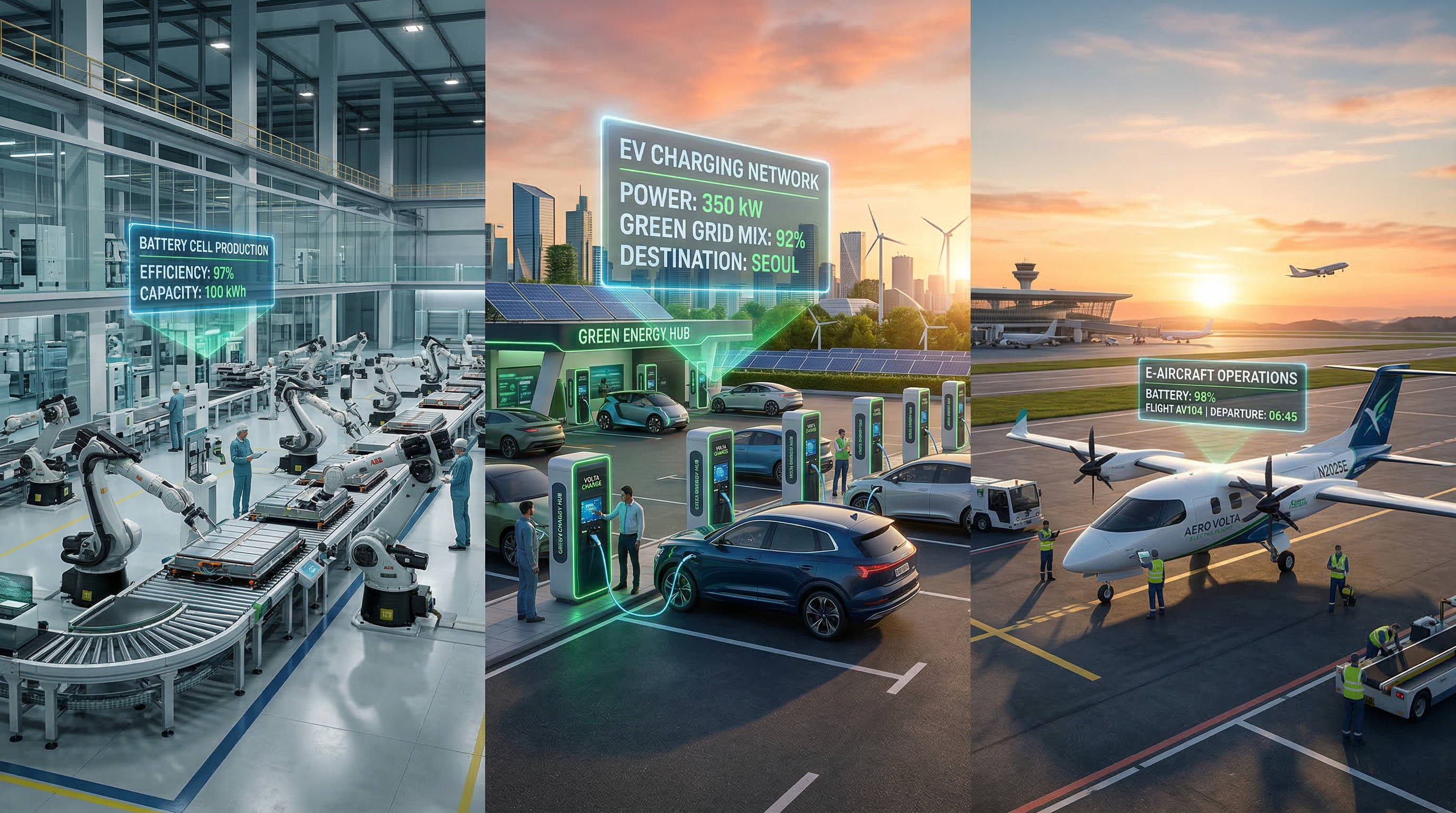
The landscape of future green technology has reached a critical inflection point in 2026. After years of research, development, and pilot programs, the technologies that will define sustainable transportation and energy storage for the next decade are finally transitioning from laboratory promise to commercial reality. This comprehensive guide examines the four pillars of green technology advancement that are converging to create unprecedented opportunities for both consumers and investors.
The momentum behind green technology 2026 is driven by a perfect storm of factors: breakthroughs in materials science, massive investments from industry leaders like Toyota, Samsung SDI, CATL, and BYD, regulatory pressure pushing for zero-emission transportation, and growing consumer demand for sustainable alternatives. Understanding these technological shifts is essential for anyone looking to navigate the rapidly evolving landscape of climate technology.
Pillar 1: The Solid-State Battery Race Heats Up
Among all future green technologies, solid-state batteries represent perhaps the most significant leap forward in energy storage. Unlike conventional lithium-ion batteries that use liquid electrolytes, solid-state batteries employ ceramic or glass electrolytes, offering dramatic improvements in energy density, charging speed, and safety.
Toyota's 40-Year Battery Vision
Toyota has emerged as the undisputed leader in solid-state battery development, and 2026 marks a pivotal year for the Japanese automaker. The company has announced that its first-generation solid-state battery will deliver a 20% increase in cruising range compared to current lithium-ion technology, with charging times of 10 minutes or less for a full charge.
What makes Toyota's announcement particularly significant is the projected lifespan of their batteries. According to company executives, Toyota is targeting a 40-year lifespan for its solid-state batteries, a dramatic improvement over current EV batteries that typically degrade significantly after 8-10 years. The batteries are designed to deliver over 620 miles (1,000 km) on a single charge, effectively eliminating range anxiety for most consumers.
Samsung SDI's 600-Mile Solution
Not to be outdone, Samsung SDI has unveiled its own solid-state battery technology with equally impressive specifications. The Korean electronics giant has developed an EV-specific solid-state oxide battery that claims to deliver 600 miles of range while maintaining safety standards that exceed current lithium-ion batteries.
Samsung's approach focuses on oxide-based solid electrolytes, which offer superior thermal stability compared to other solid-state chemistries. The company has announced plans for pilot production in late 2026, with mass production targeted for 2027. This timeline puts Samsung in direct competition with Toyota for commercial dominance of the solid-state battery market.
QuantumScape and the Startup Challenge
Beyond the established industrial giants, QuantumScape continues to advance its solid-state battery technology with backing from Volkswagen. The company's proprietary ceramic separator technology promises to address the dendrite formation problem that has plagued solid-state battery development for decades. While commercial production remains on the horizon, 2026 brings QuantumScape closer to delivering on years of promises with prototype testing showing promising results.
Related: For a deeper dive into the solid-state battery race, including technical comparisons and production timelines, read our comprehensive analysis Inside the Race to Build the World's First Commercial Solid-State Battery.
Pillar 2: Sodium-Ion Batteries Democratize Energy Storage
While solid-state batteries capture headlines with their premium performance, sodium-ion batteries are quietly revolutionizing the economics of energy storage. By replacing expensive lithium with abundant sodium, these batteries offer a pathway to dramatically lower costs while maintaining acceptable performance characteristics for many applications.
CATL's Naxtra Revolution
CATL, the world's largest battery manufacturer, has made sodium-ion technology a centerpiece of its 2026 strategy. The company's Naxtra line of batteries, introduced in late 2025, has entered volume production this year with energy densities reaching 175 Wh/kg, putting them on par with lithium iron phosphate (LFP) batteries that dominate the entry-level EV market.
Perhaps more impressive than the technical specifications is the projected cost. CATL has announced sodium-ion battery pricing of approximately $19 per kWh, representing a 65% reduction from current LFP costs of $55-70 per kWh. This cost advantage makes sodium-ion batteries economically viable for applications where energy density is less critical than cost, including grid storage, short-range urban vehicles, and backup power systems.
BYD's 10,000 Cycle Achievement
BYD, the Chinese automotive and battery giant, has pushed sodium-ion technology even further in 2026. The company announced that its latest sodium batteries achieve a cycle life of up to 10,000 cycles, effectively doubling the longevity of conventional lithium-ion batteries. This breakthrough addresses one of the primary concerns about sodium-ion technology: longevity.
In partnership with Changan, BYD and CATL have jointly unveiled passenger vehicles equipped with sodium-ion batteries, with commercial release scheduled for mid-2026. These vehicles target the budget-conscious segment of the market, offering ranges of 200-250 miles at price points significantly below lithium-powered competitors.
The Energy Storage Implications
The impact of sodium-ion batteries extends far beyond personal transportation. Grid-scale energy storage, which is essential for integrating intermittent renewable energy sources like solar and wind, stands to benefit enormously from lower battery costs. Peak Energy and other storage developers have announced plans to deploy sodium-ion systems at unprecedented scales, potentially accelerating the transition to renewable electricity worldwide.
Pillar 3: EV Charging Infrastructure Reaches Maturity
The expansion of EV charging infrastructure has been the critical enabler for electric vehicle adoption, and 2026 represents a watershed moment in charging accessibility. With the global EV charging station market reaching $55.78 billion and projected to grow at a 20.85% CAGR through 2031, the infrastructure gap that has constrained EV adoption is finally closing.
The Rise of Workplace Charging
Workplaces have emerged as the second-most common location for EV charging, behind only home charging. A 2025 survey by Plug In America found that employees with workplace charging were 15% more likely to report high job satisfaction, while companies offering charging benefits saw improved retention rates among EV-owning staff.
The economics of workplace charging have improved dramatically. Research from UT Dallas demonstrates how the combination of overnight home charging and daytime workplace access creates an optimal charging pattern that reduces strain on the electrical grid while ensuring vehicles are fully charged for evening commutes. This pattern also maximizes the utilization of solar power, as workplace charging can align with peak solar generation hours.
NACS Standardization and Charging Speed
The adoption of the North American Charging Standard (NACS) by major automakers including Ford, GM, Mercedes, and virtually every major EV manufacturer has simplified the charging landscape. This standardization means that EV drivers can access virtually any charging station without worrying about connector compatibility.
Charging speeds have also improved dramatically. The latest DC fast chargers can deliver 350 kW of power, enabling some modern EVs to add 200 miles of range in under 15 minutes. While not all vehicles can accept such high charge rates, the expanding network of high-speed chargers is making long-distance EV travel increasingly practical.
Smart Charging and V2G Technology
Beyond simply delivering electrons, 2026 brings the widespread deployment of vehicle-to-grid (V2G) technology. Bidirectional charging allows EVs to not only draw power from the grid but also feed power back during peak demand periods. This capability turns EVs into mobile energy storage assets, potentially generating income for owners while stabilizing the grid.
Smart charging systems using AI optimization are becoming standard features in new charging stations. These systems can automatically schedule charging during periods of low electricity prices or high renewable energy availability, reducing costs for consumers while supporting grid stability.
Related: Looking to install home EV charging? Our comprehensive guide covers the Best Home EV Chargers in 2026, with detailed reviews and installation advice.
Pillar 4: Electric Aviation Takes Flight
While ground transportation electrification dominates headlines, the electrification of aviation represents perhaps the most ambitious application of green technology. Electric aviation promises to transform short-haul air travel, urban mobility, and cargo delivery while eliminating the significant carbon footprint of conventional aviation fuel.
Lilium and the eVTOL Promise
Lilium, the German aerospace company, continues to pursue its vision of electric vertical take-off and landing (eVTOL) aircraft. The Lilium Jet features 36 electric ducted fans integrated into its wings, enabling smooth transitions from vertical lift for takeoff and landing to efficient forward flight. With a target range of 280 km (175 miles) and a top speed of 200 mph, the Lilium Jet targets the urban air mobility market.
Despite financial challenges that saw the company face restructuring in early 2025, Lilium has secured new funding and continues development of its certification program with aviation authorities. The company maintains that commercial operations could begin by 2027, offering an alternative to ground transportation for congested urban corridors.
Heart Aerospace and Regional Aviation
Swedish startup Heart Aerospace is taking a different approach, focusing on conventional takeoff and landing electric aircraft for regional routes. The company's ES-30 aircraft, designed to carry 30 passengers on routes up to 200 km entirely on electric power, has attracted orders from United Airlines, Mesa Air Group, and other regional carriers.
Heart's strategy targets the thousands of short regional routes worldwide that currently use inefficient turboprop aircraft. By electrifying these routes, Heart aims to reduce aviation emissions while operating at lower costs than conventional aircraft. The company has established a manufacturing facility in Gothenburg and is targeting 2028 for entry into commercial service.
AI-Optimized Flight and Carbon Reduction
Beyond propulsion systems, artificial intelligence is optimizing every aspect of electric aviation. AI-powered flight management systems can optimize routes in real-time to maximize range, while predictive maintenance algorithms reduce downtime and improve safety. These technologies are essential for making electric aviation economically viable.
The carbon reduction potential is substantial. A fully electric aircraft produces zero direct emissions during flight, and when charged with renewable electricity, offers a pathway to zero-emission aviation. Even hybrid-electric configurations, where electric motors supplement conventional engines, can reduce fuel consumption by 30-50% on short routes.
Related: Discover the current state and future prospects of electric flight in our detailed report: Electric Aviation Is No Longer Science Fiction.
Beyond the Four Pillars: AI and Climate Technology Convergence
While batteries, charging infrastructure, and electric aviation form the visible foundation of green technology in 2026, artificial intelligence is emerging as the invisible force accelerating progress across all domains. AI climate technology is optimizing everything from battery manufacturing to grid management to aircraft design.
AI-Driven Battery Optimization
Machine learning algorithms are revolutionizing battery research by predicting which material combinations will yield the best performance characteristics. Companies like Monolith and research institutions including MIT and Stanford are using AI to accelerate the discovery of new electrolyte materials and electrode compositions, potentially shortening the development cycle from years to months.
Smart Grid Integration
The integration of millions of EVs, home batteries, and solar installations into the electrical grid requires sophisticated management systems. AI-powered grid optimization software can predict electricity demand patterns, manage distributed energy resources, and ensure grid stability as renewable energy penetration increases. These systems are essential for realizing the full potential of distributed green technology.
Carbon Capture Enhancement
AI is also improving the efficiency of carbon capture technologies, which will be necessary to address historical emissions even as we transition to green technologies. Machine learning models are optimizing the chemical processes used in direct air capture systems while AI-powered monitoring systems are improving the verification and tracking of carbon sequestration projects.
Related: Learn how carbon capture technology is scaling to address climate change: Carbon Capture at Scale: The Race to Remove CO2 from the Atmosphere.
Investment Opportunities and Market Outlook
The convergence of these green technologies in 2026 creates unprecedented investment opportunities across multiple sectors. Understanding the competitive landscape and technology trajectories is essential for investors looking to participate in the green technology revolution.
Battery Technology Stocks
Established players like CATL, BYD, and Samsung SDI offer exposure to the battery manufacturing boom, while specialized companies like QuantumScape and Solid Power provide higher-risk, higher-reward opportunities in solid-state technology. Materials companies supplying lithium, sodium, and specialized ceramics are also benefiting from the battery expansion.
Charging Infrastructure Growth
The charging infrastructure sector is experiencing rapid consolidation, with established networks like Tesla Supercharger, Electrify America, and ChargePoint expanding coverage while new entrants target specialized segments like workplace charging and fleet solutions. The opening of Tesla's network to all EVs using NACS connectors represents a significant shift in the competitive landscape.
Electric Aviation Ventures
The electric aviation sector remains in its early stages, with companies like Lilium, Heart Aerospace, Joby Aviation, and Archer Aviation competing for market leadership. While many of these companies face significant technical and regulatory challenges, the potential market for urban air mobility and regional electric aviation is substantial.
The Path Forward: Challenges and Opportunities
Despite the remarkable progress of 2026, significant challenges remain on the path to widespread green technology adoption. Supply chain constraints for critical minerals, the need for expanded electrical grid capacity, and regulatory hurdles for new technologies all present obstacles that must be overcome.
Critical Mineral Supply Chains
The production of batteries at the scale required for global transportation electrification will require massive increases in the supply of lithium, nickel, cobalt, and other critical minerals. While sodium-ion batteries reduce dependence on lithium, the overall scale of battery production creates supply challenges that must be addressed through expanded mining, recycling, and potentially alternative chemistries.
Grid Infrastructure Requirements
The widespread adoption of EVs and electric heating systems will require significant upgrades to electrical distribution infrastructure. Utilities are investing billions in grid modernization, but the pace of investment must accelerate to match the growth of electric load. Smart charging and vehicle-to-grid technologies can help mitigate these challenges, but substantial infrastructure investment remains necessary.
Regulatory and Certification Challenges
New technologies like solid-state batteries and electric aircraft face rigorous safety certification processes. While these processes are essential for ensuring public safety, they can slow the deployment of new technologies. Regulatory frameworks must evolve to accommodate innovation while maintaining safety standards.
Conclusion: The Green Technology Decade Begins
2026 marks the beginning of what will likely be remembered as the green technology decade. The technologies that have been in development for years, solid-state batteries, sodium-ion storage, comprehensive charging infrastructure, and electric aviation, are finally reaching commercial viability. The convergence of these technologies creates opportunities that extend far beyond environmental benefits to encompass economic growth, energy security, and improved quality of life.
For consumers, the implications are clear: the transition to sustainable transportation and energy is no longer a sacrifice but an upgrade. Vehicles with longer range, faster charging, and lower operating costs are becoming available. For investors, the green technology sector offers growth opportunities that rival any in the technology sector. For society as a whole, the scaling of these technologies offers a credible pathway to addressing climate change while maintaining economic prosperity.
The future of green technology is not just bright; it is here. The decisions made by consumers, investors, and policymakers in 2026 will shape the trajectory of this transformation for decades to come. Understanding these technologies, their capabilities, and their limitations is essential for anyone looking to participate in and benefit from the green technology revolution.
About the Authors
The Future Green Tech Editorial Team combines expertise in battery technology, transportation electrification, and climate policy. Our analysts track the latest developments in green technology from laboratories to commercial deployment, providing readers with actionable insights on the sustainable technologies shaping our future.